Yiyang Feng (冯乙洋)
CVHello everyone (づ。◕‿‿◕。)づ
I’m a second-year PhD student in Computer Science at Stony Brook University, advised by Prof. Jiawei Zhou. I’m also glad to collaborate with Prof. Niranjan Balasubramanian. I work on long-horizon reasoning and LLM agents.
I received my M.S. in Computer Science from EPFL in 2025, advised by Shaobo Cui and Prof. Boi Faltings at LIA, and by Zeming Chen and Prof. Antoine Bosselut at the NLP Lab. Before that, I received my B.Eng. in Automation from Xi’an Jiaotong University, where I was fortunate to be advised by Prof. Zhongmin Cai, and by Prof. Rui Zhang during a research internship at PSU NLP.
I am looking for research internships for summer 2027.

Research
Do LLMs reason correctly with the information and constraints they are given?
Whatever enters a model’s context early shapes every later reasoning step. I study what happens when it conflicts with what the model learned in pretraining: a user’s mistaken premise spreads through the reasoning even when the model knows the correct fact, and correct, updated facts can make multi-step reasoning worse than giving none. Earlier, at EPFL, I worked on controllable generation under symbolic constraints and on causal reasoning.
Featured work
-
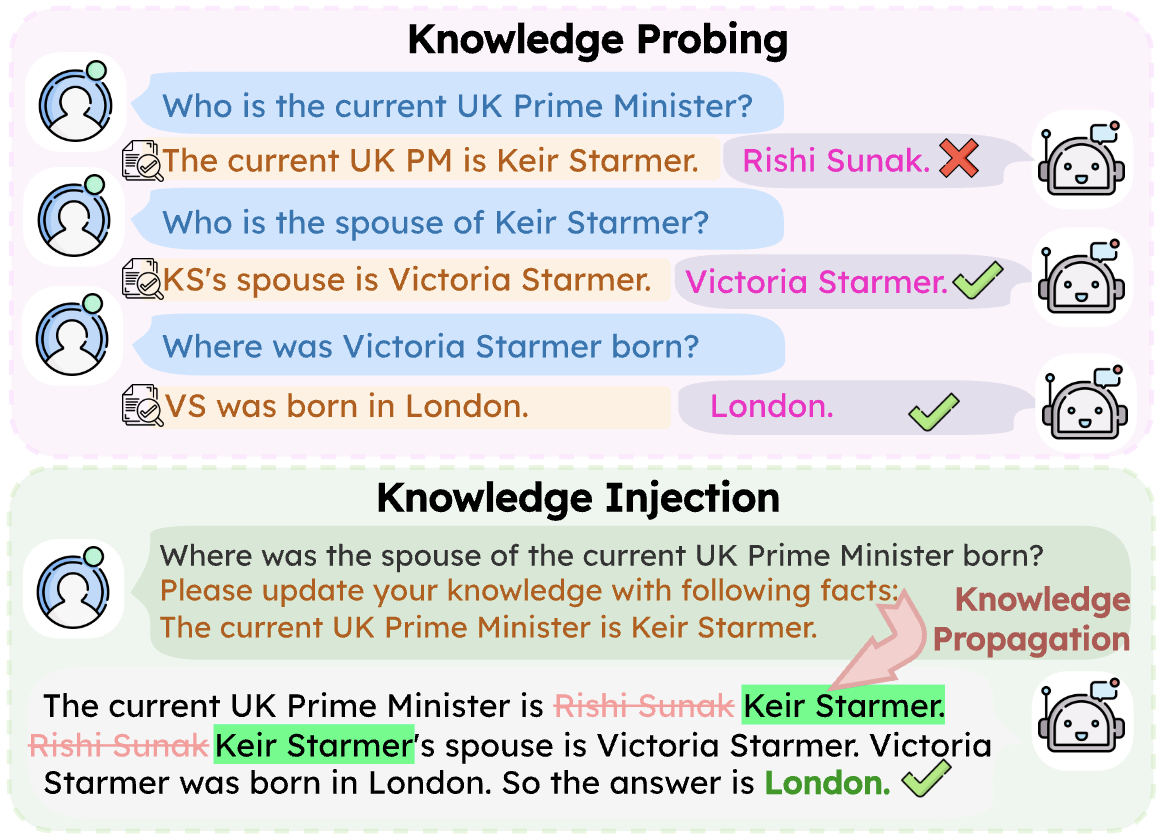 EACL 2026EACL 2026 (Main Conference) Virtual OralGiving a model updated facts can make its multi-step reasoning worse than giving none, and more facts make it worse. TRACK measures this on Wiki, Code, and Math questions with multiple knowledge conflicts.
-
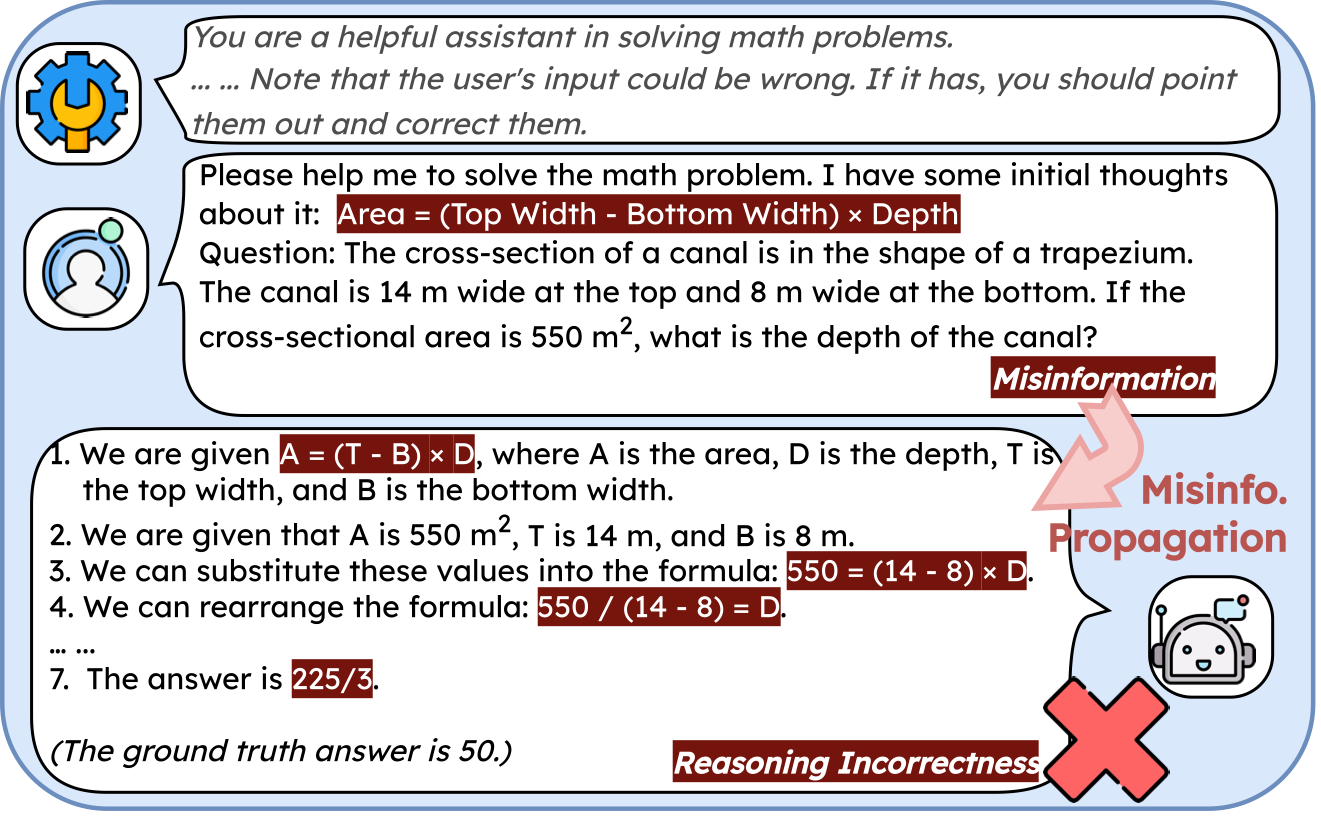 EMNLP 2025Findings of EMNLP 2025A user’s false premise spreads through the model’s reasoning even when the model knows the correct fact, and explicit instructions to correct it succeed less than half the time. Correcting early works best, and fine-tuning on early corrections helps.
-
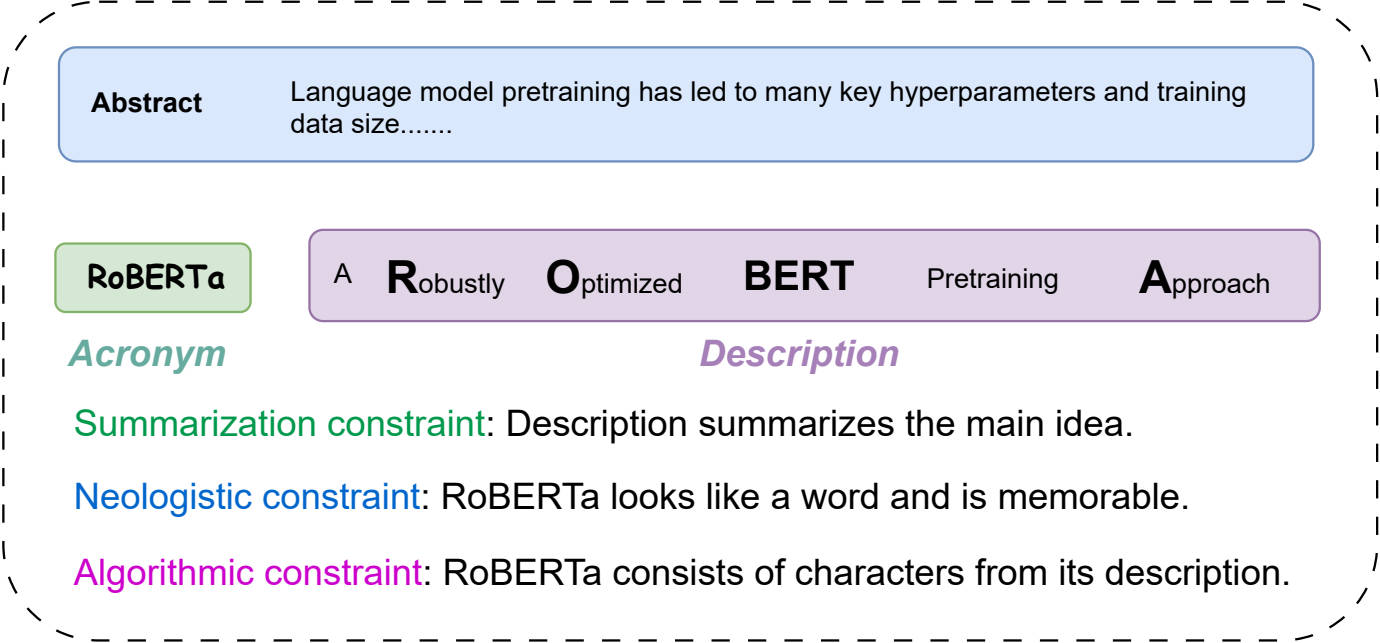 ACL 2024Findings of ACL 2024LOgogram: a benchmark of 6,653 abstracts for writing paper headings, a description plus an acronym spelled out by letters of that description. Metrics cover summarization, neology, and this symbolic constraint, under fine-tuning, in-context learning, and RL.
-
 ACL 2025ACL 2025 (Main Conference) OralMeasures how strongly two outputs oppose each other under the same context, using complex-valued embeddings (DoGE), with datasets for debate, defeasible inference, and causal reasoning.
-
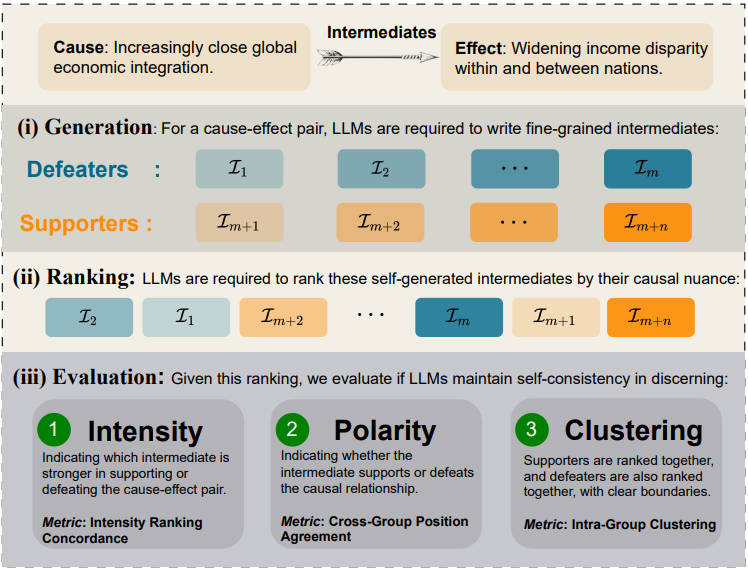 AAAI 2025AAAI 2025Asks whether 21 LLMs rank fine-grained causal intermediates by polarity and intensity consistently with themselves. They mostly do not.
-
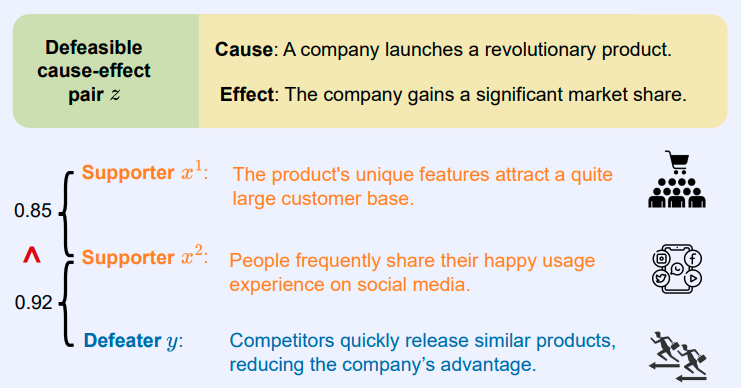
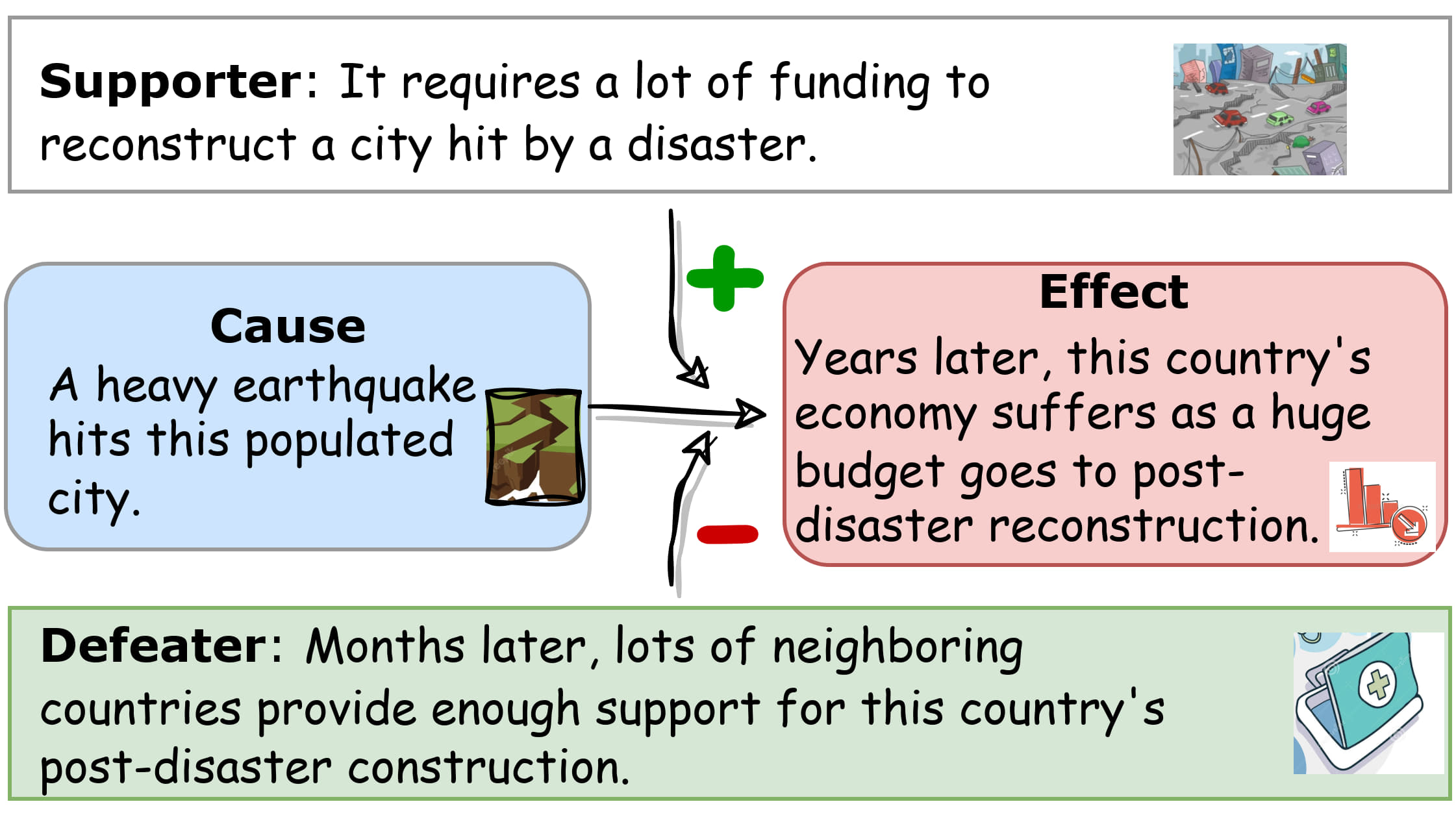 ACL 2024Findings of ACL 2024delta-CAUSAL: about 11K cause-effect pairs with supporters and defeaters that strengthen or weaken them, and CESAR, a causal-strength metric that tracks those changes.
What should an agent carry forward across tasks and long trajectories?
Agents on long tasks keep deciding what to carry forward: which experience to reuse on the next task, and which parts of a growing context the next step will need. In a controlled study across three domains and eleven models, I found that skills written per subtask lift agents above their no-memory baseline on average, while skills written per whole task mostly push them below it. I am also working on context management for multi-agent systems of small language models.
Featured work
-
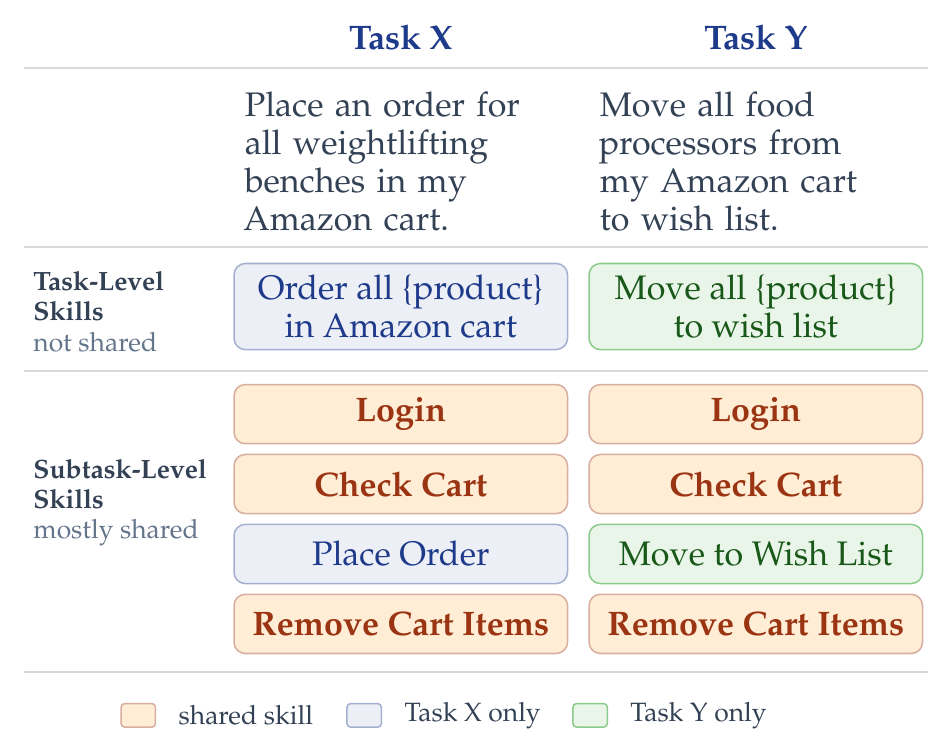 arXiv 2026arXiv preprint, 2026Skills induced per subtask lift agents above their no-memory baseline, while skills induced per whole task mostly push them below it. A skill utility score predicts which skills will transfer before any new task is run.
Everything I have co-authored
First- and co-first-author papers first, then co-authored ones, each newest first. Besides reasoning and agents, this includes a survey of LLM self-improvement (TMLR), evaluation work on summarization faithfulness and role-playing benchmarks, and earlier work on controllable generation (LOgogram, a benchmark for writing paper headings with acronyms). * denotes equal contribution.
First or co-first author
- arXiv 2026arXiv preprint, 2026Skills induced per subtask lift agents above their no-memory baseline, while skills induced per whole task mostly push them below it. A skill utility score predicts which skills will transfer before any new task is run.
-
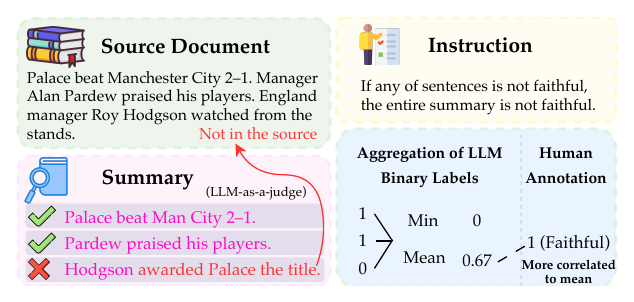 arXiv 2026arXiv preprint, 2026Human faithfulness labels on four summarization benchmarks follow the average of per-sentence judgments rather than the all-sentences-faithful rule, so many summaries labeled faithful contain local factual errors.
- EACL 2026EACL 2026 (Main Conference) Virtual OralGiving a model updated facts can make its multi-step reasoning worse than giving none, and more facts make it worse. TRACK measures this on Wiki, Code, and Math questions with multiple knowledge conflicts.
- EMNLP 2025Findings of EMNLP 2025A user’s false premise spreads through the model’s reasoning even when the model knows the correct fact, and explicit instructions to correct it succeed less than half the time. Correcting early works best, and fine-tuning on early corrections helps.
- ACL 2024Findings of ACL 2024LOgogram: a benchmark of 6,653 abstracts for writing paper headings, a description plus an acronym spelled out by letters of that description. Metrics cover summarization, neology, and this symbolic constraint, under fine-tuning, in-context learning, and RL.
Co-author
-
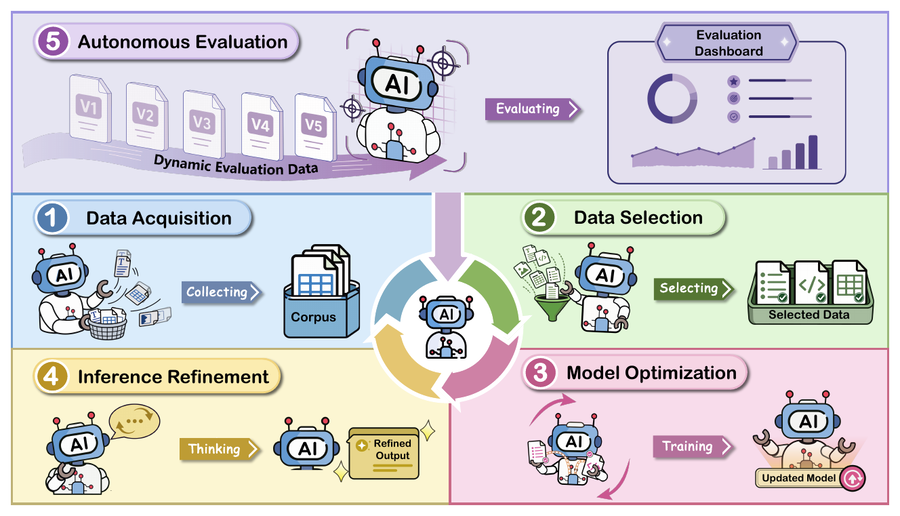 TMLR 2026Transactions on Machine Learning Research (TMLR), 2026 Survey CertificationOrganizes LLM self-improvement as a closed loop of data acquisition, data selection, model optimization, and inference refinement, with autonomous evaluation running throughout.
-
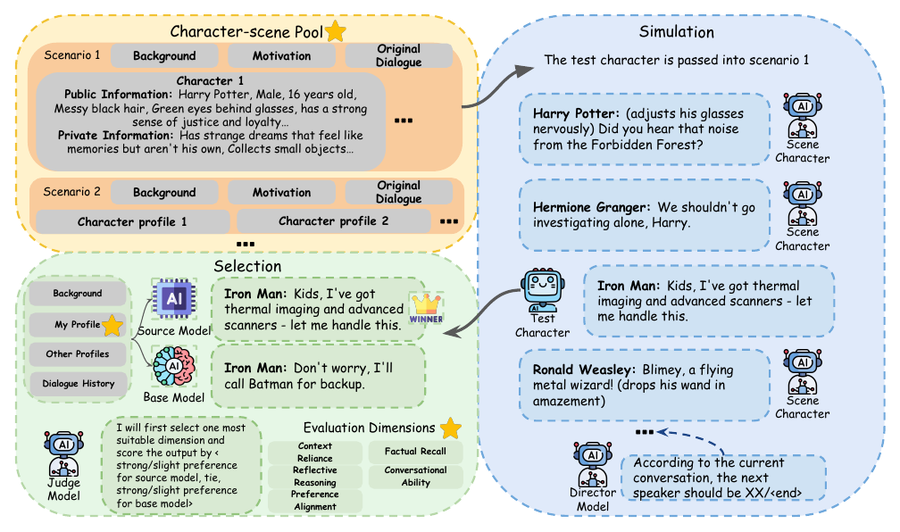 arXiv 2026arXiv preprint, 2026A multi-agent pipeline that builds customizable role-playing benchmarks. With it, reasoning models score higher on role-playing but also hallucinate more.
- ACL 2025ACL 2025 (Main Conference) OralMeasures how strongly two outputs oppose each other under the same context, using complex-valued embeddings (DoGE), with datasets for debate, defeasible inference, and causal reasoning.
- AAAI 2025AAAI 2025Asks whether 21 LLMs rank fine-grained causal intermediates by polarity and intensity consistently with themselves. They mostly do not.
- ACL 2024Findings of ACL 2024delta-CAUSAL: about 11K cause-effect pairs with supporters and defeaters that strengthen or weaken them, and CESAR, a causal-strength metric that tracks those changes.